


Showing posts with label Sulawesi. Show all posts
 Tana toraja is quite simply unique. A cultural island, hemmed in by mountains on all sides, the toraja prove there is life after death with their elaborate ceremonies. Take the beauty of Bali, the houses of the Bataks in Sumatra and the megalithic cultures of Sumba and you’re still not even close. Cave graves, hanging graves, tau tau (life-sized wooden effigies) of the dead and buffalo carnage every summer; it’s macabre but mesmerising.
 This is a world unto itself.
Tana toraja is undoubtedly the most popular destination in Sulawesi. It’s a vast, pretty and mostly unspoilt area of traditional villages, unique architecture and fascinating cultures. The funeral season is usually during July and August, when toraja working throughout Indonesia return home for celebrations, tourists come in numbers and Rantepao hotel prices peak.
The Burial Ceremony
 Most Tana Torajans are Chirstian while still retaining their traditional norms and customs. If someone dies, his or her body will be kept inside the house for days, sometimes weeks or even months. The body is well treated and preserved by using cetain herbs. The purpose of keeping the body are to give a chance to the family of the deceased to gather and collect money. Once the fund is enough to hold a necessary ceremony, the ritual begins.
From the Torajan's point of view, however, life starts from and ends in heaven. Thus, there are two most important events in human life-birth and death. In this case, to properly reach heaven means to have proper burial, which in turn means to provide as many buffalos and pigs as possible.
On the burial ceremony, they leave the corpse inside a cave. Many visitor would surprise of not smelling any strong odor that usually comes with a corpse. Oral history says taht in the old days, the deceased would be "ordered" by a shaman to walk by him or herself to the cave. It was a zoombie-like procession. Unfortunately no one can witness this kind of ritual today.
The most spectacular of Torajan rituals are the funerals. For Torajan, a funeral is the single most important ceremony in the life cycle. It is based on a strong belief that the soul of the deceased travels to the land of the south and in this land of eternity, he will need all the requisites of everyday life in the hereafter just like when he was alive in this world. Funeral ceremonies are festival lasting as long as ten days with much feasting and entertainment. Animal sacrifices are made to ensure eternal life in the afterlife and to safeguard the descendants.
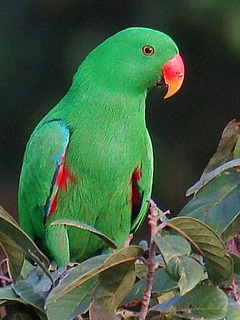 Summary: Easy access and a great introduction to Sulawesi’s birds.\
Key bird species: Maleo; Tabon Scrubfowl; Spot-tailed Goshawk; Bare-faced Rail; Golden-mantled Racquet-tail; Sulawesi Hanging-Parrot; Pygmy Hanging-Parrot; Minahassa Owl; Sulawesi Owl; Ochre-bellied Hawk-Owl; Speckled Hawk-Owl; Sulawesi Nightjar; Sulawesi Kingfisher; Lilac Kingfisher; Green-backed Kingfisher; Scaly Kingfisher; Sulawesi Hornbill; Knobbed Hornbill; Red-bellied Pitta; Rusty-backed Thrush; Sulawesi Myna; White-necked Myna; Finch-billed Myna
Birdwatching locations:
Tangkoko is a really straightforward place to go birding. The closest accommodation options are on the main road as it enters Batu Putih village, and directly opposite them is the entrance track to Tangkoko. The track crosses a stream and then passes through some scrubby forest for 500 m before arriving at the official entrance gate to the park. From here the track continues parallel to the sea for around 2km until it reaches two small buildings (names Post 2 and Post 3). From here the track continues along the coast, but becomes more indistinct, and many trails head inland.
The birding is good all along the entrance track (from the main road to Post 3). Patches or forest along the road hold Rusty-backed Thrush and Green-backed Kingfisher, Finch-billed Myna and the endemic Yellow-billed Malkoha. By night the open grassy areas hold Sulawesi Nightjar, and Sulawesi Scops-Owl is present along the length of the track.
Around the area of Post 2 and Post 3 it is worth exploring into the forest. Here is among the best area for seeing Rusty-backed Thrush, and as you move away from the main coast track and uphill your chances of seeing Lilac Kingfisher, Sulawesi (Dwarf) Kingfisher, Sulawesi Hornbill, Knobbed Hornbill, Red-bellied Pitta and Tabon Scrubfowl increase. It is also in this area that Maleo are occuasionally seen, and on at least one occasions Bare-faced Rail has been recorded.
As you move inland and uphill, towards the roosting trees of the Spectral Tarsiers (which are definitely worth a look!) the forest becomes good for Golden-mantled Racquet-tail, Spot-tailed Goshawk, and more of the birds mentioned above.
By night, a walk around the forest above Post 2 and Post 3 should get you more Sulawesi Scops-Owl and a chance of both Ochre-bellied and Speckled Hawk-Owl. This is also the area that rare and very elusive Minahassa Owl is most commonly seen. If you are lucky the local guides will know of a daytime roost tree, but these change frequently and so your only chance might be a night time chase around listening for the infrequent calls!
For those with a few days at Tangkoko, a day trip (or overnight camping trip) higher on the mountain is interesting. The climb takes around 6-7 hours depending on how fit you are (and how many birds you stop to look at on the way!). Many of the same birds found lower are also present, plus you get a better chance of seeing Sulawesi Myna, the hanging parrots, and on the highest stretches, Scaly Kingfisher. The latter prefers areas dominated by wild ginger, and is usually found perched only 1-2 metres above the ground. They don’t move much, but can be very responsive to calls.
Other side trips that are easy to arrange at Tangkoko include a trip east along the coast to visit a still active Maleo nesting ground. It is probably easier to see Maleo at Tambun, in Bogani National Park, but if you have time here, or you are not planning to visit Bogani, then this at least gives you a chance. A visit to the Maleo site is usually made by boat.
Getting a boat west along the coast is also interesting. For many years now there has been a regular daytime roosting site of Sulawesi Masked-Owl not far from Batu Putih village in a cave on the sea cliffs. It can only be viewed from a boat, but the views are great if you make the trip.
Continuing further west by boat brings you to an area of mangrove that holds the endemic Great-billed Kingfisher. This is a smart looking bird and seeing it makes the trip worthwhile. If you don’t see it here, another good spot for this species is the jetty of the Santika Hotel nearer Manado (directly opposite Bunaken Island, on the main land).
Access and Accommodation:
Getting to Tangkoko is easy. It is about 1.5 hrs drive from the airport, or about 2 hrs from the centre of Manado. By car or taxi take the main road from Manado to Bitung (the port and freight terminal on the eastern tip of North Sulawesi), and just before reaching Bitung turn left at the town of Girian. From there a smaller road snakes its way 20 km north towards the village of Batu Putih. By public transport the route is the same. Catch a bus from Manado to Bitung, and get off at Girian. From there occasional mini-busses run to Batu Putih, but if there is not one there when you arrive and you don’t want to wait, just take an ojek (motorbike taxi).
The most commonly used accommodation options are those that you first meet on the left hand side of the road when you reach Batu Putih (this includes ‘Mama Roo’s’ and ‘Ranger Guest House’). There is another more expensive option, reached by heading into Batu Putih village and turning left along the beach, but it is a bit further from the birding action.
To enter the forest proper at Tangkoko you are usually expected to take a guide (that is to say, they may not let you into the park without one), although if you stick only to the coast track as far as Post 2 you may be allowed in alone. Your accommodation can help you find a guide and negotiate your entrance to the park, or failing that the park staff can assign you a guide at the entrance/ticket gate. Many of the guides at Tangkoko are excellent birders, and many have ‘secret spots’ where they can show you some of the most sought after species.
Guides obtained from the main accommodation options will be up-front about the fees you need to pay (which are not high, but seem to vary from year to year!). They themselves will have to pay the park, so as to avoid the need to be assigned another guide by the park itself, and this will be included in the price. Getting guides assigned by the park at the entrance gate is a bit more random, some are good and some are not, and the fees they charge can vary mysteriously, so better to sort this out from your accommodation!
Most of the guides speak some English, and they can help you arrange trips to the mountain, night birding, or any of the side excursions mentioned above. Just chat through your plans with them and tell them what you want to see (or point at it in a bird book!). //burung-nusantara.org
Tangkoko is a really straightforward place to go birding. The closest accommodation options are on the main road as it enters Batu Putih village, and directly opposite them is the entrance track to Tangkoko. The track crosses a stream and then passes through some scrubby forest for 500 m before arriving at the official entrance gate to the park. From here the track continues parallel to the sea for around 2km until it reaches two small buildings (names Post 2 and Post 3). From here the track continues along the coast, but becomes more indistinct, and many trails head inland.
The birding is good all along the entrance track (from the main road to Post 3). Patches or forest along the road hold Rusty-backed Thrush and Green-backed Kingfisher, Finch-billed Myna and the endemic Yellow-billed Malkoha. By night the open grassy areas hold Sulawesi Nightjar, and Sulawesi Scops-Owl is present along the length of the track.
Around the area of Post 2 and Post 3 it is worth exploring into the forest. Here is among the best area for seeing Rusty-backed Thrush, and as you move away from the main coast track and uphill your chances of seeing Lilac Kingfisher, Sulawesi (Dwarf) Kingfisher, Sulawesi Hornbill, Knobbed Hornbill, Red-bellied Pitta and Tabon Scrubfowl increase. It is also in this area that Maleo are occuasionally seen, and on at least one occasions Bare-faced Rail has been recorded.
As you move inland and uphill, towards the roosting trees of the Spectral Tarsiers (which are definitely worth a look!) the forest becomes good for Golden-mantled Racquet-tail, Spot-tailed Goshawk, and more of the birds mentioned above.
By night, a walk around the forest above Post 2 and Post 3 should get you more Sulawesi Scops-Owl and a chance of both Ochre-bellied and Speckled Hawk-Owl. This is also the area that rare and very elusive Minahassa Owl is most commonly seen. If you are lucky the local guides will know of a daytime roost tree, but these change frequently and so your only chance might be a night time chase around listening for the infrequent calls!
For those with a few days at Tangkoko, a day trip (or overnight camping trip) higher on the mountain is interesting. The climb takes around 6-7 hours depending on how fit you are (and how many birds you stop to look at on the way!). Many of the same birds found lower are also present, plus you get a better chance of seeing Sulawesi Myna, the hanging parrots, and on the highest stretches, Scaly Kingfisher. The latter prefers areas dominated by wild ginger, and is usually found perched only 1-2 metres above the ground. They don’t move much, but can be very responsive to calls.
Other side trips that are easy to arrange at Tangkoko include a trip east along the coast to visit a still active Maleo nesting ground. It is probably easier to see Maleo at Tambun, in Bogani National Park, but if you have time here, or you are not planning to visit Bogani, then this at least gives you a chance. A visit to the Maleo site is usually made by boat.
Getting a boat west along the coast is also interesting. For many years now there has been a regular daytime roosting site of Sulawesi Masked-Owl not far from Batu Putih village in a cave on the sea cliffs. It can only be viewed from a boat, but the views are great if you make the trip.
Continuing further west by boat brings you to an area of mangrove that holds the endemic Great-billed Kingfisher. This is a smart looking bird and seeing it makes the trip worthwhile. If you don’t see it here, another good spot for this species is the jetty of the Santika Hotel nearer Manado (directly opposite Bunaken Island, on the main land).
Access and Accommodation:
Getting to Tangkoko is easy. It is about 1.5 hrs drive from the airport, or about 2 hrs from the centre of Manado. By car or taxi take the main road from Manado to Bitung (the port and freight terminal on the eastern tip of North Sulawesi), and just before reaching Bitung turn left at the town of Girian. From there a smaller road snakes its way 20 km north towards the village of Batu Putih. By public transport the route is the same. Catch a bus from Manado to Bitung, and get off at Girian. From there occasional mini-busses run to Batu Putih, but if there is not one there when you arrive and you don’t want to wait, just take an ojek (motorbike taxi).
The most commonly used accommodation options are those that you first meet on the left hand side of the road when you reach Batu Putih (this includes ‘Mama Roo’s’ and ‘Ranger Guest House’). There is another more expensive option, reached by heading into Batu Putih village and turning left along the beach, but it is a bit further from the birding action.
To enter the forest proper at Tangkoko you are usually expected to take a guide (that is to say, they may not let you into the park without one), although if you stick only to the coast track as far as Post 2 you may be allowed in alone. Your accommodation can help you find a guide and negotiate your entrance to the park, or failing that the park staff can assign you a guide at the entrance/ticket gate. Many of the guides at Tangkoko are excellent birders, and many have ‘secret spots’ where they can show you some of the most sought after species.
Guides obtained from the main accommodation options will be up-front about the fees you need to pay (which are not high, but seem to vary from year to year!). They themselves will have to pay the park, so as to avoid the need to be assigned another guide by the park itself, and this will be included in the price. Getting guides assigned by the park at the entrance gate is a bit more random, some are good and some are not, and the fees they charge can vary mysteriously, so better to sort this out from your accommodation!
Most of the guides speak some English, and they can help you arrange trips to the mountain, night birding, or any of the side excursions mentioned above. Just chat through your plans with them and tell them what you want to see (or point at it in a bird book!). //burung-nusantara.org
The nation
of Indonesia stretches along an equatorial archipelago numbering nearly
18,000 islands in total. Encompassing several ecosystem types as well
as straddling the boundaries between the Oriental and Australasian
faunal regions, Indonesia is one of the most biodiverse nations on
Earth.
"Lore Lindu National Park. © Nurlin Djuni"

The high level of biodiversity is amply reflected in Indonesia's
avifauna with 17% of the world's total bird species represented.
1,539 species of which 381 are endemics!
Tremendous scenery of volcanoes, asian rural land, lowland rainforest, wetlands and mangroves and stunning shorelines.
Tremendous scenery of volcanoes, asian rural land, lowland rainforest, wetlands and mangroves and stunning shorelines.
Some facts about Indonesia.
The Republic of Indonesia, is a nation in Southeast Asia. Comprising 17,500 islands, it is the world's largest archipelagic state. With a population of over 200 million, it is the world's fourth most populous country and the most populous Muslim-majority nation, although officially it is not an Islamic state. Indonesia is a republic, with an elected parliament and president. The nation's capital city is Jakarta. The country shares land borders with Papua New Guinea, East Timor and Malaysia. Other neighboring countries include Singapore, the Philippines, Australia, and the Indian territory of the Andaman and Nicobar Islands.
The Republic of Indonesia, is a nation in Southeast Asia. Comprising 17,500 islands, it is the world's largest archipelagic state. With a population of over 200 million, it is the world's fourth most populous country and the most populous Muslim-majority nation, although officially it is not an Islamic state. Indonesia is a republic, with an elected parliament and president. The nation's capital city is Jakarta. The country shares land borders with Papua New Guinea, East Timor and Malaysia. Other neighboring countries include Singapore, the Philippines, Australia, and the Indian territory of the Andaman and Nicobar Islands.
Across its many islands, Indonesia consists of distinct ethnic, linguistic, and religious groups. The Javanese are the politically dominant and largest ethnic group. As a unitary state and a nation, Indonesia has developed a shared identity defined by a national language, a majority Muslim population, and a history of colonialism and rebellion against it. Despite its large population and densely populated regions, Indonesia has vast areas of wilderness that support the world's second highest level of biodiversity. The country is richly endowed with natural resources, yet poverty is a defining feature of contemporary Indonesia.

This summer, the hill town of Tomohon in North Sulawesi will spring into full bloom when the Tomohon International Flower Festival gets underway from 8 – 12 August. Highlight of the Event is the Tournament of Flowers parade, which will bel participated by a number of Indonesian provinces as well as overseas participants, government enterprises, 15 districts in the province itself, as also private companies. Carrying the theme: “Wonderful Tomohon”, the Tomohon International Flower Festival Is expected to be watched by over 30,000 people.
There will be four main components at the Festival, said Tomohon mayor, Jimmy F. Eman at the press Conference held at the Miinistry of Tourism and Creative Economy, witnessed by Deputy Minister,Sapta Nirwandar. These components include: the Tournamenf of Flowers, to be held on 8 August; the Queen of Flowers pageant, on 10 August; the Tourism, Trade, Investmentand Florikultura Exhibition to be held from 8 – 12 August, as well as a Cultural Festival from 9 – 12 August.
The Agricultural Office said that there will be a total of 3 million flowers provided by the 42 agricultural groups in Tomohon to be displayed during the Festival, used by participants and decorate the town, among which flowers are its main produce of fresh carnations and chrysanthemums.
The Tomohon International Flower Festival is held every two years since 2008. In the first year, participants included 46 cities in Indonesia while the Festival was watched by 20,000 people. In 2010, some 82 floats participated, including those fromi Malaysia, Vietnam, North Korea, India, and Russia. In this second Event the Festival was watched by 25,000 persons.
Facing two active volcanoes, the Lokon and the Mahewu, the cool hill resort of Tomohon lies 24 km south of Manado, capital city of North Sulawesi, on the way to pleasant Lake Tondano.
Because of its constant cool climate and fertile soil, Tomohon has grown into North Sulawesi’s main producer of vegetables and flowers. When flowers are in bloom, Tomohon becomes a pretty town where almost every house displays colorful fresh flowers. Here are also many seminaries and religious schools of a number of Christian denominations. Most famous among its landmarks is the “Bukit Inpirasi” or “Inspiration Hill”, where communities congregate to seek inspiration for solutions amidst life’s problems.
The Tomohon International Flower Festival is supported by the Ministry of Tourism and Creative Economy.
For more information, please open: http://tiff2012.tomohon.info/
//indonesiatravel

The 24th Meeting of the International Coordinating Council (ICC) of UNESCO’s Man and the Biosphere (MAB) Programme held in Paris on 11-13 July, has confirmed the Wakatobi National Marine Park in South East Sulawesi as World’s Biosphere Reserve, among 20 newly so recognized reserves in the world.
This brings to eight, the number of UNESCO recognized Biosphere Reserves in Indonesia, that include: the Cibodas Park in West Java, Tanjung Puting National Park in Central Kalimantan, the Lore Lindu National Park in Central Sulawesi, the Komodo National Park in East Nusatenggara, Gunung Leuser National Park in Aceh and North Sumatra, Siberut area in West Sumatra and the Giam Siak Kecil in Riau, reports Indopos.
Located in the heart of the Asia-Pacific Coral Triangle, Wakatobi covers an area of 1.4 million hectares of islands and sea. Its seas contain 942 fish species and 750 coral species among a total of 850 coral species in the world. This compares to 50 coral species in the Caribbean and 300 in Egypt’s renowned Red Sea dive sites.
Wakatobi is in fact an acronym of the 4 main islands in the Wakatobi archipelago, which are: Wangi-Wangi (Wa), Kaledupa (Ka), Tomia (To) and Binongko (Bi). Its pristine waters are bordered by the deep Banda Sea to the north and east, and the Flores Sea to the south.
The main purpose of UNESCO’s World Biosphere Reserve program is to ensure harmonized balance between man, nature and the environment by ensuring available sustainable resources, build the economy of local societies, while protecting the diversity of nature and culture, explained spokesperson for the Ministry of Forestry, Sumarto, to the press, as reported by Indopos.
The successful implementation of the program needs a closely knit partnership among all stakeholders, continued Sumarto, including from research and educational institutions at national and regional level as well as community leaders.
While UNESCO explains that the main characteristics of biosphere reserves are, among others:
• Achieving the three interconnected functions: conservation, development and logistic support;
• Focus on a multi-stakeholder approach with particular emphasis on the involvement of local communities in management;
• Foster dialogue for conflict resolution of natural resource use;
• Integrate cultural and biological diversity, especially the role of traditional knowledge in ecosystem management;
• Demonstrate sound sustainable development practices and policies based on research and monitoring;
• Act as sites of excellence for education and training;
For details on the UNESCO Biosphere Programne, click: http://www.unesco.org
For more information on Wakatobi, click: www.wakatobi.info

South Sulawesi Province, geographically, is located in 116o48 122o36 East Longitude and 0o12 -8o South Latitude. It is adjancent to Makassar Strait in the west, Bone Bay and Southeast Sulawesi Province in the east, West Sulawesi Province in the north and Flores Sea in the south. South Sulawesi area is 45,764.53 square kilometers.
South Sulawesi Province that is capitalized in Makassar is divided into 21 regencies and 3 cities, namely Regency of Selayar, Regency of Bulukumba, Regency of Bantaeng, Regency of Jeneponto, Regency of Takalar, Regency of Gowa, Regency of Sinjai, Regency of Maros, Regency of Pangkajene Kepulauan, Regency of Barru, Regency of Bone, Regency of Soppeng, Regency of Wajo, Regency of Sidenrengrapang, Regency of Pinrang, Regency of Enrekang, Regency of Luwu, Regency of Tana Toraja, Regency of North Luwu, Regency of East Luwu, Regency of North Toraja, City of Makassar, City of Pare Pare, and City of Palopo.
The biggest area is Regency of East Luwu with area of 6,944.88 square kilometers, and the smallest area is City of Pare Pare with area of 99.33 square kilometers. The maximal air humidity in 2009 in South Sulawesi Province was 97.3oC, and the minimal air humidity was 51oC and the average was 82.6oC with rainfall of 2978.3 mm and wid pressure along 2009 was 1011.77 MBS. The maximal average of air temperature along 2009 was 33.4o C and the minimal average was 22.7o C. South Sulawesi Province economic's structure in 2009 was dominated by agriculture sector (28.57%), processing (13.67%) and trading (16.47%).
In agriculture sector, the biggest contribution is from corn, followed by cassava and tobacco. The main commodity in South Sulawesi is agriculture sector and services sector. The main commodity of agriculture sector is plantation sub-sector with commodity of oil palm, cocoa, rubber, sugarcane, coffee, coconut, cloves, chasew, pepper, vanilli, and sago; fishery sub-sector with commodity of fishery catch, floating cage cultivation, cage cultivation, fresh water pond culture, sea culture, and brackish cultivation.
The main commodity of services sector is tourism, nature tourism and culture tourism. To support the economic's activity, this province has 3 airports, namely Andi Jemma Airport, Hasanuddin Airport, and Pongtiku Airport.
There are 3 roads in this province, namely government road, regency road and provincial road. Provincial road lenght is 1.26 km, regency road lenght is 29.616 Km and government road lenght is 1.556 km. For sea transportation, it has 10 seaports, namely Awerange/Barru Port, Bajoe Port, Jeneponto Port, Special Port of Biringkassi, Makassar Port, Palopo Port, Pare pare Port, Selayar Port, Sinjai Port, and Siwa Port.
For industry, it has 3 industrial area, namely Makassar Industrial area (Kimia I), Makassar Industrial area (Kimia II), Makassar Industrial area (Persero) that are supported by electrics and telecommunication facilities.
 South Sulawesi, that constitutes the narrow south-western peninsula of the island, is geographically and culturally diverse. South Sulawesi posses fertile rice fields, lofty mountains, dry southern region, and long shoreline dotted with fishing villages. The highlight is, except striking landscapes, remarkable people, this part of the island is home to four major ethnic groups and several minor ones. The costal and lowland regions of South Sulawesi are occupied mainly by pound and frank Bugis. The Bugis have always been great seafarers and shipbuilders. Other groups, as Makassarese and Mandarese are closely related to the Bugis. In the northern part of peninsula is a region inhabited by people collectively known as Toraja.
 The best known of these peoples, the Sa'dan Toraja, get their name from the great river the courses through the mountains. A believe that their forefathers descended from heaven on a boat onto mountain some twenty generations ago, the Toraja have unique culture based on strong animistic beliefs. They practice an ancestor cult where death and afterlife ceremonies are great feasts. A strict hierarchy is followed in the villages and for an important figure, wedding and burial ceremonies, can take days to perform buffalo are sacrificed, the deceased's remains are placed in a coffin and interred in caves hollowed out in high cliffs.
The mouth of the cave is guarded by lifelike statues, who diligently look out from a balcony at the families and friends they have left. Tongkonan, family houses, are built on stilts with the roof rearing up at either end, representing the prows of the first ship to arrive in the area with the Torajan's ancestors. The houses all face north and some say that this because it was from the north that the ancestors of the Toraja came. Others, however will say that the north (and east) are regarded as the realm of the gods, the compass of life.
PLACES OF INTEREST
Makassar
 Makassar is the largest city, communication and business centre in eastern Indonesia. The capital city of South Sulawesi played a significant role as the entry to the former kingdom of Gowa and now to the whole province because of its harbour. The city expanded outwards from its most important landmark, that of Benteng Ujung Pandang which faces the sea front. One of the eleven fortresses of the kingdom, it was built in 1545 during the reign of Tuni Pallanga, the 10th sultan of Gowa. When Gowa capitulated to the colonial forces under the treaty of Bungaya in 1667, the fort was renamed Rotterdam by Admiral Speelman who constructed bastions and buildings of typical Dutch architecture making it the centre of the civilian government, including a church on its premises. One of the best preserved forts of that area, only the thick walls of earth and stones remain of the original complex, now occupied by educational and cultural offices of the provincial government. The two buildings house the Ujung Pandang State Museum, exhibiting archaeological and historical objects, manuscripts, numismatics, ceramics and ethnic costumes and ornaments. The royal tombs, ruins, and sacred sites of Gowa and Tallo are today the only remainders of the gone prominence of 17th-century Makassar.
Parepare Parepare was in the past part of the kingdom of Suppa and a significant coastal port for the inland kingdoms of Sidenreng and Rappang, near the central lakes. Today is a busy port and a stopover on the way from Makassar to Toraja.
Tana Toraja
 Tucked among the rocky and lush plateaus of inland South Sulawesi live many isolated tribes known as a group of Torajan.
 Tana Toraja, known as "Toraja Land" is one of most beautiful regions of Indonesia. It is admired because of distinctive cultural exceptionality, extremely gorgeous scenery, funeral ceremonies, old traditions, traditional carvings and craftsmanship. The Toraja have unique culture based on strong animistic beliefs, they practice an ancestor cult where death and afterlife ceremonies are great feasts.
A strict hierarchy is followed in the villages and for an important figure, wedding and burial ceremonies, can take days to perform, when buffalos are sacrificed, the deceased's remains are placed in a coffin and interred in caves hollowed out in high cliffs. The mouth of the cave is guarded by lifelike statues, who diligently look out from a balcony at the families and friends they have left. Torajan ( there are about 360,000 inhabitants ) usually live in small settlements perched on hilltops bordered by stone walls.
Several extended families live in a series of tongkonan houses in each village, which are arranged in a circle around an open field. Tongkonan, family houses, are built on stilts with the roof rearing up at either end, representing the prows of the first ship to arrive in the area with the Torajan's ancestors.
The houses all face north and some say that this because it was from the north that the ancestors of the Toraja came. Kete Kesu is one of the region's oldest and most-visited traditional villages, idyllically surrounded by rice fields. Scattered among rice fields are several cave tombs where rows of wooden effigies gaze from hanging balconies like guards of their stony graves. The best know grave sites are in Londa, Lemo and Kete Kesu.
Malino Malino is a very enjoyable retreat from the hustle and buzz in Makassar. Situated on the lower slopes of Mount Bawa Karaeng, it offers pleasant walks with gorgeous views and really good market selling all sorts of fresh vegetables, fruits and flowers. It is especially worth visiting for orchid lovers, as lots of species can be found here in the cooler climate.
Bantimurung
 Bantimurung Reserve attracts with spectacular waterfall, cliffs and chasms, and its butterflies and birds. Rare brightly coloured butterflies are considered the most gorgeous in the world. In the dry season the waterfall is a mass of clear, surging water which drop about 12 metres from smoothed rocks into a deep pool below.
Taman Purbakala Leang-Leang
 Declared an archaeological site, these prehistoric caves have strange rock carvings of hands and a wild pig, believed to be 5,000 year old. There are 55 such caves in South Sulawesi, all are a important supply of information about the prehistory not only of South Sulawesi but of Southeast Asia as a whole.
Sengkang and Lake Tempe
 The capital town of Wajo Regency is well-known for its silk weaving and is the centre of Buginese silk. This area is populated by the Buginese ethnic group, famous for their crossing to other islands as traders of silk, sarongs and other material.
 Here you can find Tempe Lake, one of the tourist resorts. Sailing and boating can be enjoyed on this lake. Take a motorized canoe through the water hyacinth beds - it's a beautiful trip at any time of the year, especially in the dry season fro anybody who enjoys watching birdlife.
The river is buzzing with people fishing, washing and swimming. Worth of visit is a floating village. At times, rivers and lake flood. The houses along the river are all on stilts so people simply rig up long bamboo walkways to connect their houses to the shore or their get around by boat.
Bone ( Watampone ) This is a quiet, spacious town with several old made of wood buildings from the Dutch period set in green, overgrown gardens. The main attractions are the museum, which contains ceremonial umbrellas, traditional clothing and ritual gear used by priests, and the great wooden palace built in 1930s to house the reinstated Raja of Bone. Alongside is the rumah adat, where the hadat ( council of seven ) used to meet.
Palopo This small town is dominated by the cloud-covered mountain ranges which tower imperiously behind it. The spectacular pass to Palopo from Tana Toraja was for centuries the major east coast trade exit. Down the pass came gold, resins, rare woods, fine coffees and slaves. Up went iron swords and weapons from Luwu's coastal armories, salt and dried fish.
Gallery
-
Best Western Vega Hotel The tourist BEST WESTERN Vega Hotel & Convention Center is a part of the biggest Europea...
-
 Zhangye Danxia Landform is focused predominantly in Linze and Sunan counties in Gansu Province. it's each the biggest and therefore the...
 -
 Cosmopolitan and polished, Singapore is one of Southeast Asia's most glamorous capitals, functioning as a high-traffic travel hub and...
 -
Are you prepared to eat "balut" -- ducks egg, bagoong -- shrimp paste, fish sauces and taste some tropical produce? Let u...
-
The main Tourist Information Center (TIC) is located on the basement level of the Korea Tourism Organization (KTO) headquarters in Seoul. ...


